


En kamp som er større enn fotball
Fotballen har mange store rivaloppgjør. Noen handler om byer. Noen handler om klasseforskjeller. Noen handler om religion, politikk, lokal stolthet eller historiske konflikter. Likevel er det ett oppgjør som står igjen som det mest kjente, mest omtalte og mest globale klubboppgjøret i verden: El Clásico mellom Barcelona og Real Madrid.
Dette er ikke bare en kamp mellom to av verdens største fotballklubber. Det er et møte mellom to identiteter, to historiske maktsentre og to helt forskjellige fotballfilosofier. Barcelona mot Real Madrid handler om mer enn poeng, tabellplassering og trofeer. Det handler om Catalonia mot Madrid, om regional stolthet mot hovedstadens makt, om La Masia mot Galácticos, om lokal identitet mot global glamour.
Det er nettopp denne kombinasjonen som gjør El Clásico så unik. Mange rivaliseringer har sterkere lokal intensitet. Mange derbyer kan være mer aggressive på tribunen. Men ingen klubbkamp kombinerer historie, politikk, kultur, superstjerner, trofeer og global oppmerksomhet på samme måte som Barcelona mot Real Madrid.
Historien bak El Clásico
Rivaliseringen mellom Barcelona og Real Madrid går langt tilbake i spansk fotballhistorie. Klubbene vokste frem i en tid der fotballen fortsatt var i ferd med å finne sin plass i samfunnet, men det tok ikke lang tid før begge ble mer enn vanlige idrettslag. Barcelona ble raskt et symbol på Catalonia, mens Real Madrid utviklet seg til å bli et symbol på hovedstaden og den spanske eliten.
I starten handlet rivaliseringen naturlig nok mest om sport. Begge klubbene ønsket å være best i Spania, begge tiltrakk seg store spillere, og begge bygget tidlig en vinnerkultur. Men etter hvert som Spania ble preget av politiske spenninger, regionale konflikter og spørsmål om identitet, fikk kampene mellom klubbene en helt annen tyngde.
Barcelona ble for mange katalanere en representant for noe større enn fotball. Klubben ble en arena der man kunne vise stolthet for Catalonia, for språket, kulturen og den regionale identiteten. Real Madrid ble på sin side koblet til hovedstaden, makten og den sentrale spanske staten. Det gjorde at hvert møte mellom klubbene fikk en symbolsk betydning som ingen vanlig toppkamp kunne matche.
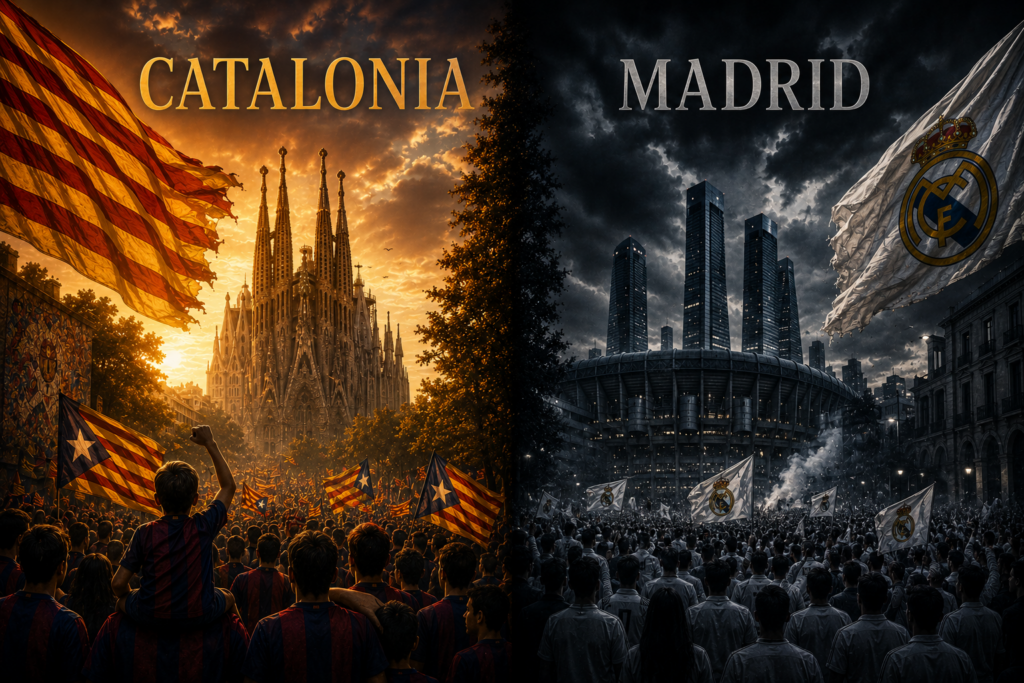
Catalonia mot Madrid
For å forstå hvorfor El Clásico er så stort, må man forstå spenningen mellom Catalonia og Madrid. Catalonia har en sterk egen identitet, med eget språk, egen kultur og en lang historie med ønske om større selvstyre. Barcelona, som regionens største by og kulturelle sentrum, ble naturlig nok et symbol på denne identiteten.
Real Madrid representerte noe helt annet. Klubben kom fra hovedstaden, byen der den politiske makten i Spania var samlet. Derfor ble kampen mellom Barcelona og Real Madrid også tolket som en kamp mellom region og stat, mellom det katalanske og det spanske, mellom ønsket om særpreg og makten fra sentrum.
Dette betyr ikke at alle Barcelona-supportere er politiske, eller at alle Real Madrid-supportere representerer staten. Slik blir det for enkelt. Men historien har likevel gitt oppgjøret en politisk og kulturell ladning som alltid ligger i bakgrunnen. Når Barcelona møter Real Madrid, følger det med mer følelser enn i en vanlig fotballkamp.
“Més que un club”
Barcelonas berømte slagord, “Més que un club”, betyr “mer enn en klubb”. Det er kanskje det mest presise uttrykket for hva Barcelona har betydd for mange mennesker i Catalonia. Klubben ble ikke bare et sted for fotball. Den ble et samlingspunkt for identitet, stolthet og tilhørighet.
I perioder der katalansk språk og kultur ble presset tilbake, fikk Barcelona en enda sterkere rolle. Stadion ble et sted der folk kunne føle fellesskap. Klubben ble et symbol på motstand, stolthet og kulturell overlevelse. Derfor har Barcelona-supportere ofte sett klubben sin som noe større enn bare et lag som skal vinne kamper.
Dette er en av de viktigste grunnene til at El Clásico aldri bare kan reduseres til 90 minutter med fotball. For Barcelona-supportere har seieren over Real Madrid ofte betydd noe mer. Det har vært en seier for klubben, men også en seier for det klubben representerer.
Real Madrid og storhetens krav
Real Madrid har på sin side bygget en identitet rundt prestisje, trofeer og global dominans. Klubben er tett knyttet til ideen om å være størst. Ikke bare i Spania, men i verden. Real Madrid har alltid hatt et krav om å vinne, og det kravet har vært en sentral del av klubbens historie.
Der Barcelona ofte har dyrket ideen om identitet og spillestil, har Real Madrid dyrket ideen om storhet. Klubben skal ha de største spillerne, spille de største kampene og vinne de største trofeene. Det er en klubb der andreplass sjelden er godt nok, og der presset er enormt uansett hvem som sitter på benken eller spiller på banen.
Dette gjør El Clásico ekstra kraftfull. Barcelona kommer inn i oppgjøret med sin historie, sin identitet og sin stolthet. Real Madrid kommer inn med sin vinnerkultur, sin aura og sitt krav om å være størst. Når disse to kreftene møtes, blir resultatet mer enn bare fotball.
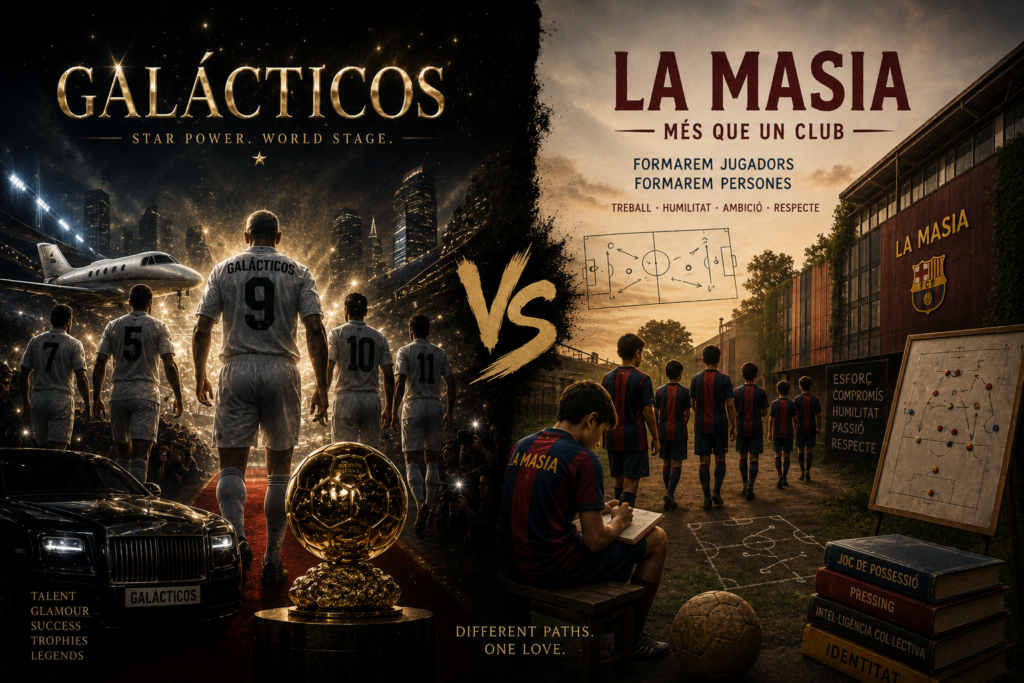
Galácticos mot La Masia
En av de mest interessante sidene ved El Clásico er kontrasten mellom Real Madrids Galácticos-tankegang og Barcelonas La Masia-filosofi. Real Madrid har flere ganger i historien satset på å hente verdens største superstjerner. Klubben har ønsket å samle de mest kjente og mest spektakulære spillerne på samme lag. Det har gitt Real Madrid et preg av glamour, makt og global kommersiell styrke.
Barcelona har samtidig ofte bygget sin identitet rundt egne spillere og en tydelig spillestil. La Masia-akademiet har produsert noen av de mest intelligente og teknisk briljante spillerne i moderne fotball. Xavi, Iniesta, Busquets og Messi ble selve symbolet på hva Barcelona ønsket å være: et lag som ikke bare vant, men som vant på sin egen måte.
Dette gjorde rivaliseringen enda mer fascinerende. Det handlet ikke bare om hvem som hadde best spillere. Det handlet om to forskjellige ideer om fotball. Real Madrid kunne representere stjernene, individualismen og den brutale vinnermentaliteten. Barcelona kunne representere systemet, akademiet, ballbesittelsen og den kollektive forståelsen.
Verdensstjernene som bygget myten
El Clásico hadde aldri blitt verdens største klubbkamp uten spillerne som har preget oppgjøret. Gjennom historien har noen av fotballens største navn spilt for Barcelona eller Real Madrid. Det har gjort hver generasjon av El Clásico til noe spesielt.
Alfredo Di Stéfano, Ferenc Puskás, Johan Cruyff, Diego Maradona, Romário, Ronaldo Nazário, Rivaldo, Ronaldinho, Zinedine Zidane, Luís Figo, David Beckham, Raúl, Xavi, Iniesta, Sergio Ramos, Karim Benzema, Cristiano Ronaldo og Lionel Messi er bare noen av navnene som har vært med på å bygge oppgjørets status.
Det spesielle med El Clásico er at kampen nesten alltid har hatt spillere som ikke bare er store i Spania, men store i hele verden. Når Barcelona og Real Madrid møtes, har det ofte vært en kamp mellom Ballon d’Or-vinnere, verdensmestere, Champions League-helter og globale ikoner.
Figo-overgangen som endret alt
En av de mest dramatiske historiene i El Clásico-rivaliseringen er overgangen til Luís Figo fra Barcelona til Real Madrid. Figo var en elsket spiller i Barcelona, en kapteinsskikkelse og en av klubbens store profiler. Da han gikk direkte til erkerivalen, ble det oppfattet som et enormt svik.
Reaksjonene var voldsomme. Da Figo returnerte til Camp Nou i Real Madrid-drakt, ble han møtt med et hatnivå som fortsatt huskes som et av de mest ekstreme øyeblikkene i moderne fotball. Det berømte grisehodet som ble kastet mot ham fra tribunen ble et symbol på hvor dypt følelsene i denne rivaliseringen faktisk stikker.
Figo-overgangen gjorde El Clásico enda større internasjonalt. Den viste verden at dette ikke bare var et oppgjør mellom to gode lag. Dette var en rivalisering der lojalitet, svik og identitet kunne skape reaksjoner langt utenfor det sportslige.
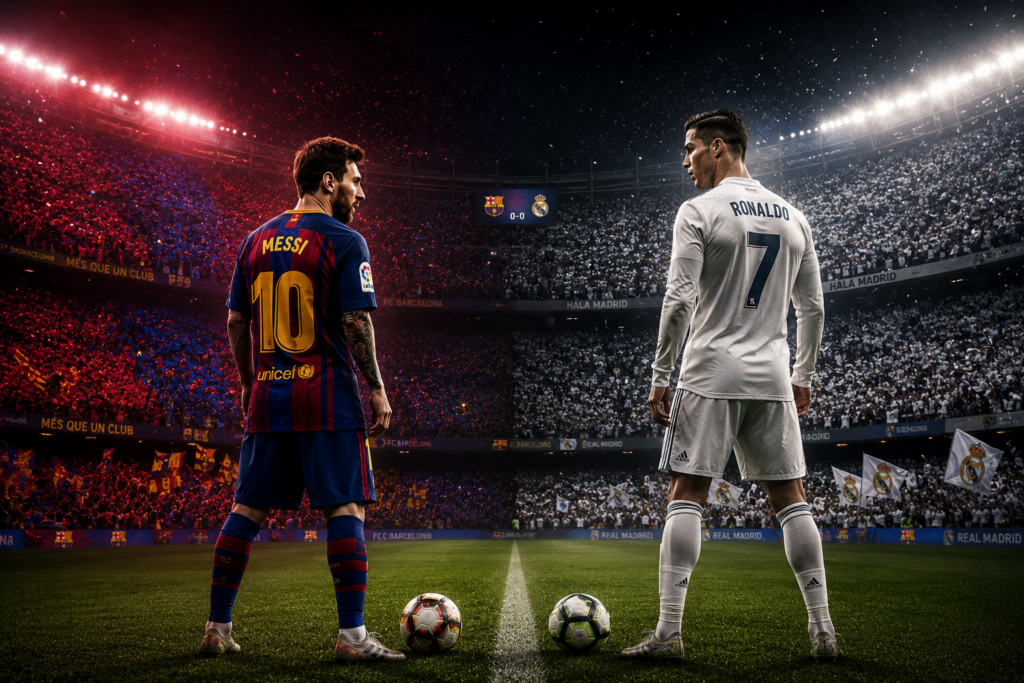
Messi mot Ronaldo
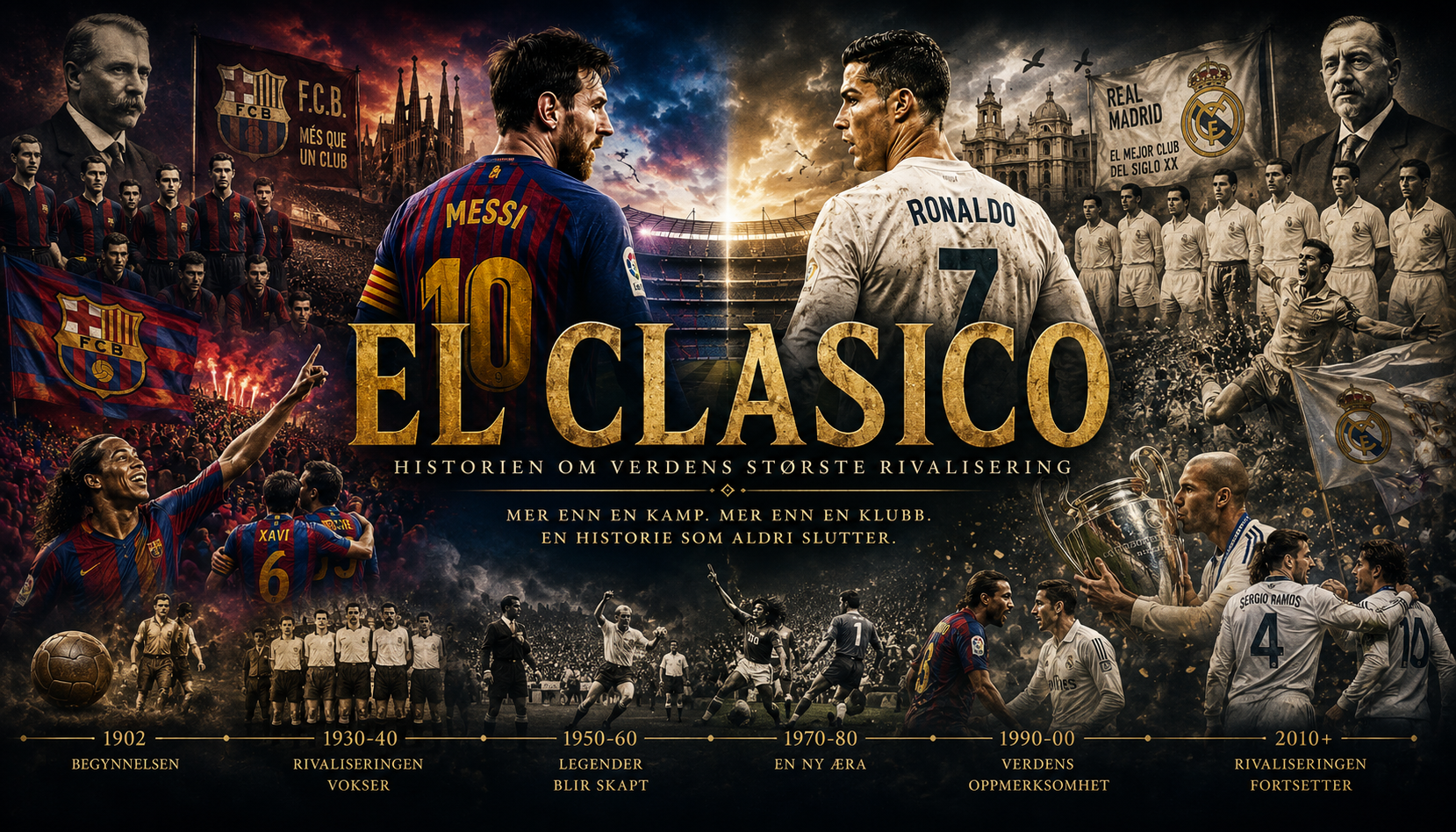
Hvis én periode virkelig gjorde El Clásico til hele verdens fotballkamp, var det årene med Lionel Messi mot Cristiano Ronaldo. To av tidenes beste spillere spilte samtidig for hver sin klubb. Messi var Barcelonas egen magiker, utviklet gjennom La Masia og tett knyttet til klubbens identitet. Ronaldo var Real Madrids ultimate superstjerne, hentet for å levere mål, trofeer og global dominans.
Hver eneste El Clásico i denne perioden føltes enorm. Det var ikke bare Barcelona mot Real Madrid. Det var Messi mot Ronaldo. Det var to fanbaser, to spillestiler og to fotballsyn som kolliderte. Hele verden fulgte med, og kampene ble diskutert i ukevis både før og etter.
Denne perioden løftet rivaliseringen til et nivå ingen annen klubbkamp kunne konkurrere med. Sosiale medier eksploderte, TV-tallene var enorme, og El Clásico ble en global begivenhet. Selv folk som ikke fulgte La Liga fast, fulgte med når Messi og Ronaldo møttes.
De ikoniske øyeblikkene
El Clásico lever ikke bare på historie og symbolikk. Oppgjøret har også levert noen av de mest minneverdige øyeblikkene i fotballhistorien. Ronaldinho som fikk stående applaus på Santiago Bernabéu. Messi som holdt Barcelona-drakten opp foran Real Madrid-supporterne etter en dramatisk scoring. Barcelonas 5-0-seier under Pep Guardiola. Real Madrids store revansjer. Sergio Ramos-utvisninger. Kontroversielle dommeravgjørelser. Sene vinnermål. Store ydmykelser.
Det er dette som gjør El Clásico så lett å selge til nye generasjoner. Kampen har ikke bare en stor fortid. Den produserer stadig nye øyeblikk som blir en del av fotballens felles hukommelse. Hver gang lagene møtes, finnes det en følelse av at noe historisk kan skje.
Hvorfor hele verden ser på
El Clásico er ikke lenger bare en spansk kamp. Det er en global merkevare. Supportere i Asia, Afrika, Amerika, Europa og Midtøsten følger oppgjøret med samme intensitet som mange lokale fans. Barcelona og Real Madrid har bygget enorme internasjonale fanbaser, og det gjør kampen til en av de mest sette klubbkampene i verden.
Grunnen er enkel: El Clásico har alt. Det har historie for de som elsker fotballens røtter. Det har politikk og kultur for de som liker at sport betyr mer enn resultatet. Det har superstjerner for de som vil se de beste spillerne. Det har drama for de nøytrale. Og det har ekte hat og stolthet for supporterne.
Mange kamper kan være store ett år fordi tabellen gjør dem viktige. El Clásico er stor uansett. Selv når ett av lagene har en svakere sesong, føles kampen enorm. Det er en del av oppgjørets styrke. Det trenger ikke alltid en tittel på spill for å være relevant.
En kamp om identitet
Det kanskje viktigste med El Clásico er at kampen handler om hvem klubbene er. Barcelona ønsker å være mer enn en klubb. Real Madrid ønsker å være størst i verden. Disse identitetene krasjer perfekt.
Barcelona-supportere ser ofte på klubben som et uttrykk for fellesskap, kultur og fotballfilosofi. Real Madrid-supportere ser ofte på sin klubb som selve symbolet på vinnermentalitet, storhet og historisk dominans. Begge klubbene har rett på sin måte. Og det er nettopp derfor rivaliseringen fungerer så godt.
El Clásico blir en kamp om hvordan fotball skal forstås. Skal fotball handle om identitet, akademi og spillestil? Eller skal fotball handle om å vinne, samle de beste og dominere de største scenene? Svaret er selvfølgelig ikke enten eller, men rivaliseringen mellom Barcelona og Real Madrid gjør kontrasten tydeligere enn noe annet oppgjør.
Derfor er El Clásico størst
Det finnes mange rivaliseringer som kan måle seg på enkeltområder. Boca Juniors mot River Plate kan ha mer kaos. Celtic mot Rangers kan ha sterkere religiøs og lokal historikk. Manchester United mot Liverpool kan ha enorm engelsk fotballtyngde. Milan mot Inter kan ha stil, historie og byprestisje. Men ingen av disse kampene har den samme totale pakken som El Clásico.
Barcelona mot Real Madrid er både historisk, politisk, kulturelt, sportslig og globalt. Det er en kamp mellom to av verdens største klubber, to av verdens største fanbaser og to av fotballens mest kjente merkevarer. Det er også en kamp som i flere tiår har hatt direkte betydning for La Liga, Champions League, Ballon d’Or-debatter og fotballens globale utvikling.
Derfor er El Clásico verdens største klubbkamp. Ikke fordi den alltid er den mest intense. Ikke fordi den alltid er den beste rent sportslig. Men fordi ingen annen kamp betyr så mye for så mange, på så mange forskjellige nivåer.
El Clásico er ikke bare Barcelona mot Real Madrid. Det er fotballhistorie, kulturkamp, superstjerneshow og globalt drama samlet i én kamp. Det er derfor hele verden fortsatt ser på.