
It began with frustration over an increasingly limited and poorer offer for those of us who like to play sports responsibly. Gradually, a larger concern emerged: What does it really say about Norway that the state is increasingly restricting access to legal services, and that politicians can adopt measures that block the internet for completely legal activities without significant resistance?
I understand that gambling can ruin lives, and that politicians want to protect vulnerable groups. But when the entire population is collectively affected by measures such as DNS blocking and payment bans – even those who play within their own limits and with control – it is, in my opinion, wrong. It is like closing the entire Vinmonopolet because someone abuses alcohol.
As a writer for 90minutefamily, a platform dedicated to analysis and discussion about sports and gaming, I have seen the need to question this system. I have tried to gather voices from both sides, but have found it far easier to get statements from those who want a licensing model than from those who defend the current exclusive model. It is a shame. Because this is a debate Norway needs.
The exclusive rights model – background and development
Norwegian gambling policy has been based on the exclusive rights model since 1948. Only state-owned operators such as Norsk Tipping and Norsk Rikstoto are allowed to offer gambling in Norway. The goal has been to prevent gambling problems and ensure that the profits go to good causes.
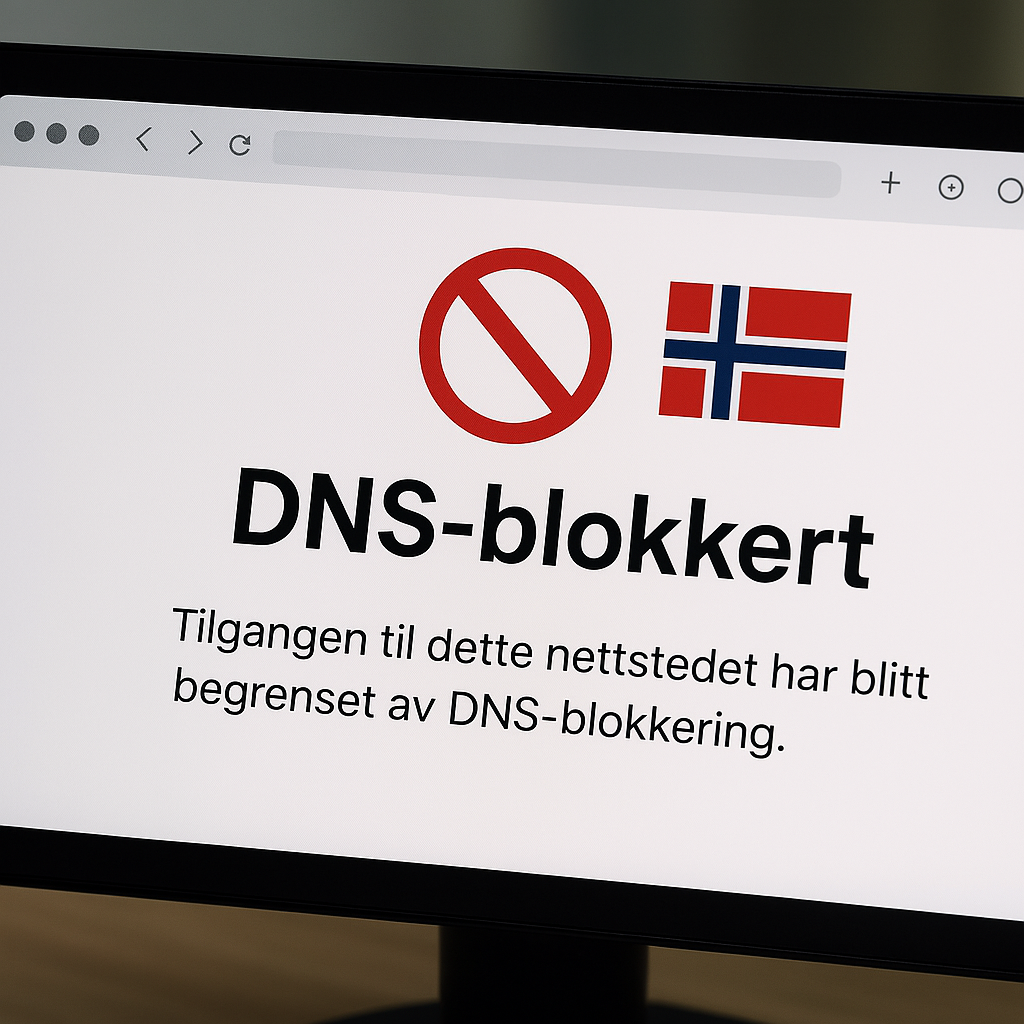
But while large parts of Europe have chosen to modernize regulations and open up licensing schemes – where serious players operate under strict regulation – Norway has held on to old structures and tightened things up even further. We have had advertising bans, payment bans and now DNS blocking.
When measures affect everyone – and hit them unevenly
The measures are not only aimed at unregulated operators, but also at ordinary people who want to gamble on legal European websites. It is like blocking the internet because someone is using it incorrectly.
At the same time, we see that Norsk Tipping runs major campaigns for Lotto and Eurojackpot – and their logos adorn international matches during prime time. When we asked for specific information about what rules they are subject to for marketing, there was no answer.
Double standards and unequal treatment
Foreign gaming companies are completely banned from Norwegian sites, but Norsk Tipping operates with great visibility. This creates the impression of a system where one player has special treatment – and the whole thing appears double standards. In an email, Norsk Tipping responded that they offer a “competitive” product.
But when we contacted customer service the day before the MLB season started, they couldn't confirm whether there would even be any betting on the games. For those of us who follow sports extensively, it's far from competitive.
Political resistance – and silence
We have received solid contributions from politicians such as Silje Hjemdal (FrP) and Tage Pettersen (H). Hjemdal calls DNS blocking "a serious infringement on freedom of information" and believes that it is a democratic problem when the state blocks access to something that is legal.
Pettersen believes the measure provides a false sense of security. People will find ways to gamble anyway. He argues for a licensing model, pointing out that it will provide better control, more accountability – and tax revenue.
Both express frustration at how difficult it is to get involved in the debate.
The Norwegian Lottery Authority: Within its mandate
The Norwegian Lottery Authority has given us thorough answers – albeit within its mandate. They point out that DNS blocking is one of several measures, and that it is the Storting and the Ministry that are responsible for the political assessment. At the same time, they acknowledge that it is easy to circumvent such blocks, and that it is unclear what actual effect the measure will have.
Banks as guardians – and threats against ordinary people
You may have heard it before: It is legal for Norwegians to play on foreign gambling sites, as long as they have a license in the EU. It says so on the government's own website. Yet it feels anything but legal. Many players say that banks act as a kind of morality police on behalf of the state – they monitor, stop transfers, send messages of concern, and in the worst case, threaten to close your accounts.
This doesn't just apply to big spenders who send millions out of the country. It applies to ordinary people who deposit a few hundred shillings to bet on an odds coupon or participate in a fantasy tournament with a licensed operator. One of those we spoke to received a warning after making several small withdrawals from a foreign gaming account. Not because it was illegal – but because it became suspicious. For whom? For what?
Let's be honest: This is absurd. It is perfectly legal to spend money on lottery tickets, scratch cards and high-risk casinos via Norsk Tipping – but if you transfer 200 kroner to an EU-licensed gaming company with stricter accountability measures than NT, then you risk getting a phone call from the bank. Or a form in the mail. Or a small letter with the undertone: “Be careful, we don't like this.”
If the goal is to prevent money laundering and protect vulnerable groups, control is legitimate. But when the system ends up making everyone who does not use Norsk Tipping's platform suspicious, then it has gone too far. Then it is no longer about accountability – then it is pure protectionism.
Gambling addiction – a problem we take very seriously
Gambling addiction is real. We don't want a market without borders. But measures must target those affected, not everyone else.
Many EU-licensed gaming companies offer measures that are as strict – or stricter – than Norsk Tipping. Loss limits, self-exclusion, age verification. These already exist. A licensing model could set requirements and give Norwegian players better protection – without depriving them of freedom of choice.
What about volunteering?
There is no doubt that the profits from Norsk Tipping go to good causes. But that does not mean that it is the only solution. Other countries with a licensing model have schemes where licensed operators pay fees and support volunteerism.
We believe that Norwegian volunteering could gain more legs with an open model, where sponsorship agreements and partnerships with licensed actors are permitted and regulated.
The experiences from Denmark and Sweden
Denmark and Sweden have both introduced licensing models. The experience? In Denmark, reports show that the channeling rate – that is, the proportion of players who play at regulated operators – is over 90%. This gives the authorities better control and the opportunity to monitor the development of gambling problems.
In Sweden, a licensing requirement has been introduced for marketing and payment services, and the supervisory authorities have broader scope to intervene. Both countries have retained accountability as a goal, but with far greater freedom of choice and competition.
A fight for freedom and responsibility
This article is written to spark a debate. It's not about promoting gambling. It's about the right to choose – and to be treated as an adult citizen in your own country.
We have tried to get statements from the politicians who defend the current model: Åse Kristin Ask Bakke (Labour Party), Minister of Culture Lubna Jaffery and the Ministry of Culture. After many attempts, we have not received any answers. Nor have follow-up questions to Norsk Tipping been answered.
The silence also speaks volumes.
Conclusion – and a little sigh
We at 90minutefamily believe in accountability. We also believe in freedom of choice. And we believe it is possible to achieve both, without the state having to play police, judge, and gatekeeper all at once.
It cannot be that you are suspected of using your own money legally – or that the bank sends you a letter of concern because you won a double at Strømsgodset and Molde.
If nothing else, we hope this article can open up a new and broader conversation.
Thank you for reading.
Written by Arve Emil Gilen
Writer for 90minutefamily.com – a platform for analysis, discussion and community around sports and responsible gaming.