
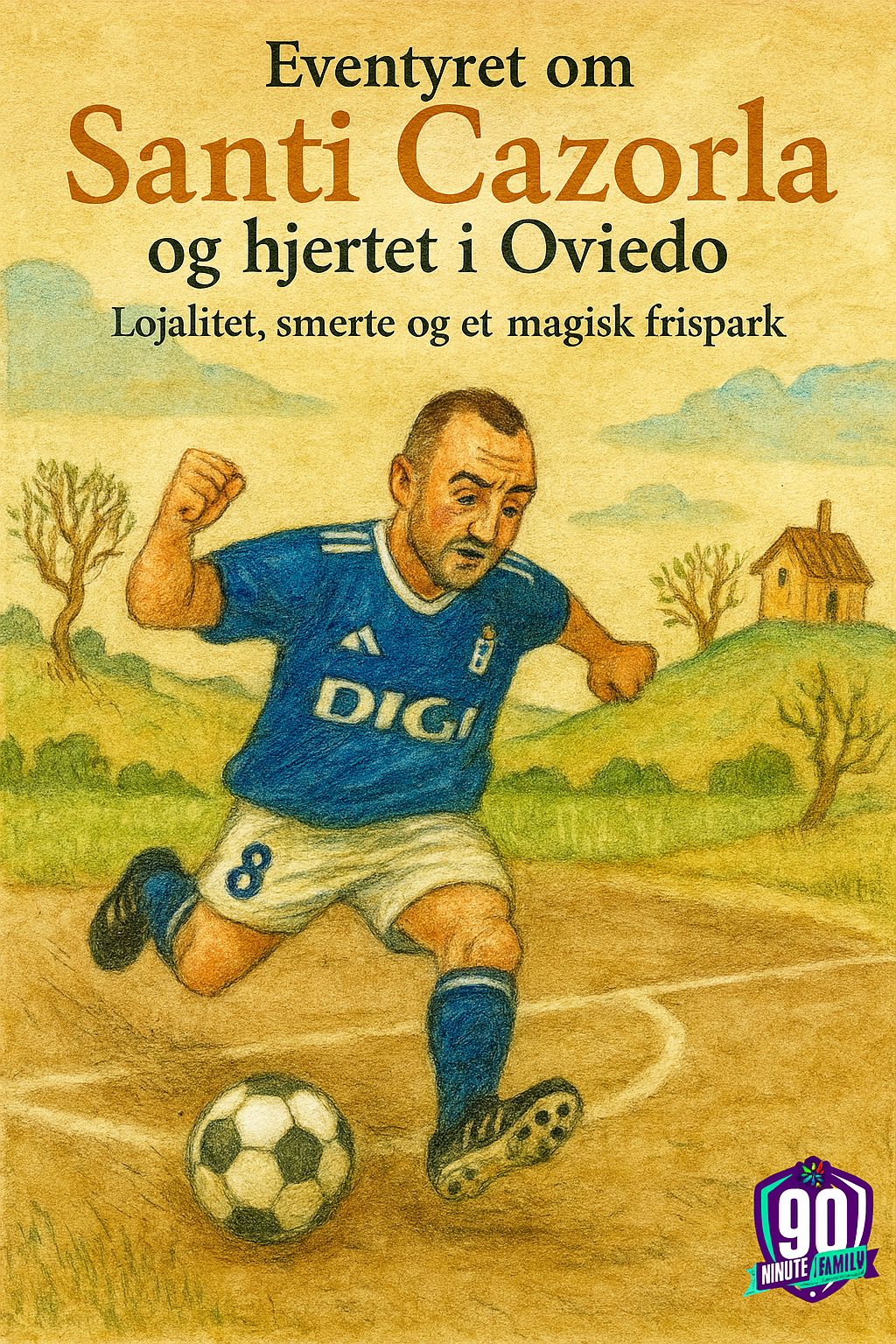
Once upon a time, high up in the mountains of Asturias, there was a little boy who loved to play football. His name was Santi, and every day he would roll the ball between small brick houses and dusty dirt pitches, while he dreamed of one day playing for the biggest clubs in the world. But in his heart there was only one club: Real Oviedo.
Santi grew up to be a great player. He danced across the grass with the ball as if he had magic dust in his boots. Many in Norway probably remember him best as the maestro at Arsenal, where he ruled the midfield with both feet, as if the left and right were equal tools in a musical football work.
But even the greatest adventure heroes encounter dark shadows.
In 2016, Santi was injured. A serious infection in his Achilles tendon was destroying everything. Doctors said he might never walk again, let alone play football. For over two years, he was off the field. He underwent at least nine surgeries and had skin transplants from his arm to his foot. It was a medical nightmare. But Santi, he didn't give up. Because he had a promise he had to keep.
Back in 2012, when Real Oviedo was in deep financial crisis and in danger of disappearing from the football map, he – along with old clubmates like Juan Mata and Michu – used his own money to save the club.
There was no sponsorship deal, no repayment agreement. It was love.
Before he returned to the club in 2023, Real Oviedo had been as far down as the fourth tier of the Spanish league system. The club was marked by lows and forgotten days, but Santi followed them all the way – not as an investor, but as a silent guardian. He thought about Requexón, the club’s training ground. Of the stadium sounds of his childhood. Of the smell of freshly cut grass. It wasn’t just a choice to come home – it was a calling from the heart.
When he returned at the age of 40, he offered to play for free. But Spanish football rules required a minimum wage. So he accepted €93,000, a small sum in European football – and ensured that 10% of the proceeds from his shirt sales would go to the club’s youth academy.
Every day on the training field he met young hopefuls. Some were no more than fifteen years old. He gave them advice, patted them on the back, and told them that the weakest foot could become the best, if only you dared to use it. And those weren’t just words. With his earnings, he provided new kits, better facilities, and more opportunities for the club’s future. “They are the hope, I was one of them once,” he said.
Throughout the season he played regularly. 32 games. 24 as a starter. Not always with the same legs as in his Arsenal days – but with the same heart. When he didn’t start, it wasn’t pride that suffered – it was the pain of not being able to help. “It hurts not to contribute, but I’m enjoying every moment that’s left,” he said quietly.
And then came the magical night. June 11, 2025. Real Oviedo needed a goal in the semi-final to secure a place in the final and keep the dream of La Liga alive – a dream that had been dead for 24 years. The club has not been in the top division since 2000. It was a long time. Too long.
The match was on hold. Oviedo was awarded a free kick. 25 meters. And there stood Cazorla. Like in the old days. Like at the Emirates, like at Mestalla, like in his childhood. He looked up, found his balance – and used his left foot. The “weak” foot. The ball danced over the wall, crept in by the post. The stadium exploded. Tears rolled. Not only from the supporters – but also from him.
A free kick. A goal. A club closer to its dream. A city that woke up.
The final is approaching. On June 21, Real Oviedo will play at home at Carlos Tartiere, this is the decisive match. The opponent will be Mirandés. It will be full. Tickets have been torn away. Streets will be decorated. Old scarves will be brought out. Because this is not just a match. It is a new chapter in the club's 100th anniversary. An opportunity to show themselves back at the top.
And Santi? He has said that promotion would be “on par with the European Championship gold with Spain” – not because the levels are the same, but because the feelings are. “This is my heart,” he said. “This is where I belong.”
Because that's what adventure is all about. Not just about winning. But about returning. About remembering who you are. About using what you've learned – and passing it on.
If one man can symbolize an entire club's journey, it's Cazorla. Not for the titles. Not for the goals. But for the way he never gave up. For the way he came home. And for the way he sparked a dream many had given up on.
And maybe – just maybe – it's exactly adventures like these that make football more than just a game.
Snipp, snipp, snout – and the adventure about the heart in Oviedo was… far from over.