


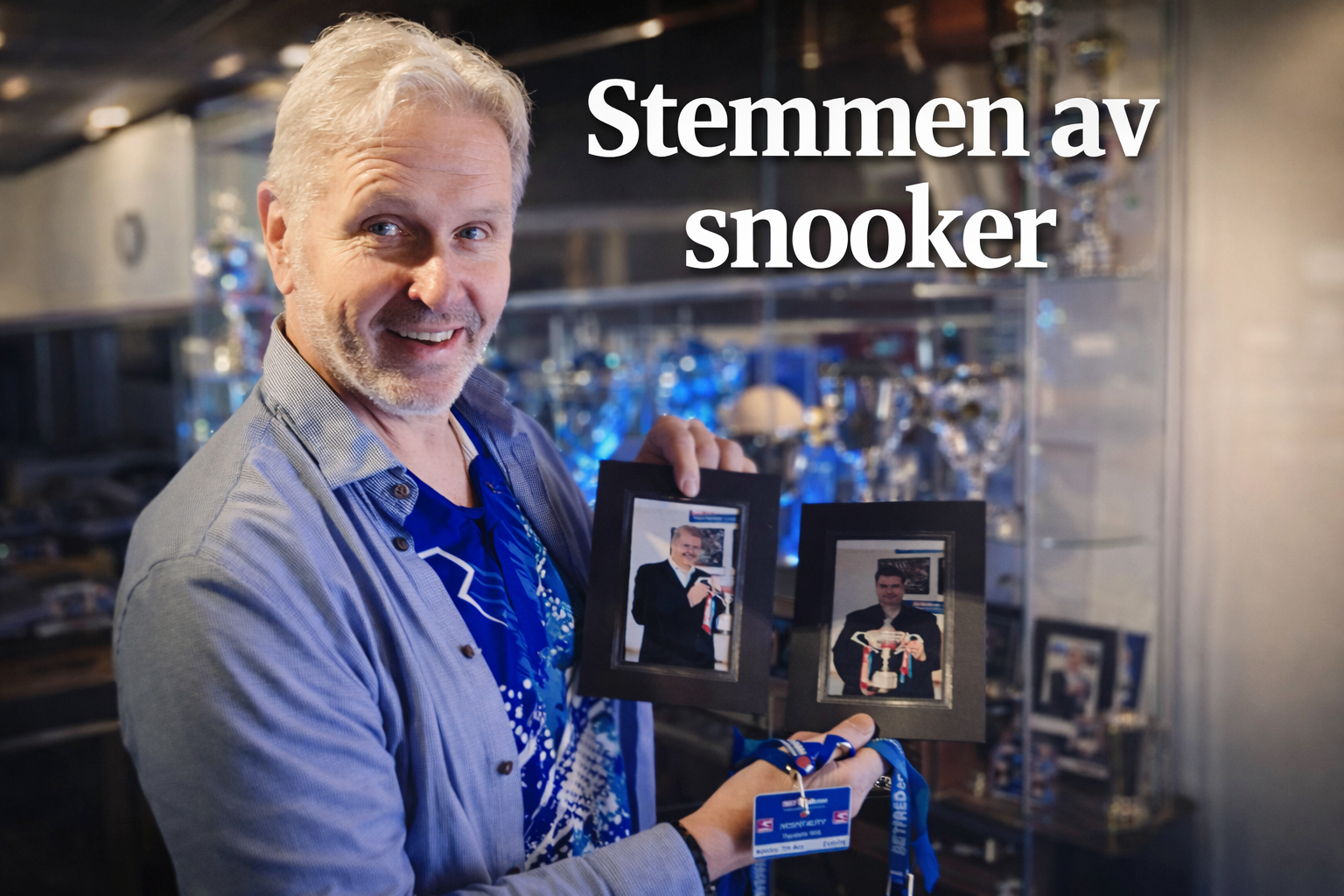
Vi har lenge jobbet med å skaffe et intervju av legenden Torstein Wik, eller som mange kjenner han bedre som, Torstein TrickWik. Kallenavnet skal vi komme tilbake til.
At vi nå skulle klare å gjøre akkurat det midt i en travel turnering han kommenterer, forteller litt om kapasitet og engasjement denne mannen har for snooker og biljarssporten generelt. Vi var så heldig å få bruke en søndags formiddag.
Vi hadde satt av to timer. Vi brukte tre. Det var for at «journalisten» måtte kaste inn håndkleet. Vi kunne holdt praten gående hele dagen. For her manglet det ikke på kunnskap, historier, engasjement og forteller vilje. Et fantastisk intervju objekt.
Han har over 20 år nå vært stemmen av snooker slik vi kjenner den gjennom tv ruta. Den myke hviskende stemmen, som likevel klarer å engasjere. Time etter time med nye fraser, fremmedord og engasjement, tar han oss sammen med lyden av kulene som klinker på den grønne filten, trygt i havn i disse lange snooker matchene.
Undertegnede har vært fan av snooker som tv sport i mange år. Hva er vel ikke bedre på en søndag, etter en litt tøff lørdag å finne hvilepulsen samtidig som man kikker på snooker. Stemmen som kommenterer er med på å gjøre dette til den perfekte avslapningen. Der var uansett slik det startet de første gangene. Nå ser jeg snooker også på andre dager. Men stemmen er fremdeles like avgjørende for sendingene.
Vi har prøvd å skildre reisen vi fikk. Selv om dette er et slikt øyeblikk som egentlig må oppleves. Det skal vise seg at kommenteringen kun er en del av mennesket. Dette er en mann som virkelig har kjempet for at biljarsporten skal være slik den er i dag.

Torstein «Trickwik» Wik –
Mannen som aldri sluttet å være nysgjerrig på hva som er mulig
Vi får lov til å bli med inn i lokalet for å finne en plass vi kan sitte alene. Lokalene tilhører klubben Torstein er medlem av. Et flott og forseggjort sted hos Stoppball Nidaros. En klubb som nettopp hadde arrangert Norges største NM turnering.
Når vi setter oss ned og starter lydopptaket, legger vi merke til det med en gang. Vi er der med en eneste gang.
Det er noe med måten han sitter på.
Litt fremoverlent. Hendene rolig samlet. Blikket skjerpet, men aldri stresset. Når han snakker om snooker, beveger fingrene og hendene seg nesten umerkelig, som om de fortsatt holder en kø. Som om han kjenner vekten av den i håndflaten.
Torstein Trickwik Wik har tilbrakt mer tid rundt et biljardbord enn de fleste. Det merkes ikke i form av store ord eller selvhøytidelighet. Det merkes i detaljene. I pausene mellom setningene. I måten han beskriver et støt på – ikke bare hva som skjer, men hva det føles som.
– Det er et øyeblikk der alt blir stille, sier han. – Du hører nesten ikke publikum lenger. Det er bare deg, kulene og avgjørelsen du skal ta.
Han smiler litt når han sier det. Ikke dramatisk. Bare gjenkjennende.
For ham har dette aldri bare vært et spill.
Et forhold, ikke en hobby
Vi lurte på hvor det hele startet. Engasjementet klarer ikke ligge skjult lenge. Han forteller om en lang reise innen biljardsporten. Der det å drive salonger og spillsteder var en del av han nesten fra starten av. Vi forstår at vi har med en viktig person å gjøre, når det kommer til hvordan biljardsporten i Norge nå ser ut. Han har vært i bresjen for mye av det som har foregått de siste 30 årene i norsk biljardsport.
Noen har hobbyer. Torstein fikk et forhold.
Det begynte med fascinasjon. Den nesten barnlige undringen over hvordan en hvit kule kunne styre alt. Hvordan millimeter på treffpunktet kunne forandre hele stillingen på bordet. Hvordan fysikk, psykologi og presisjon kunne smelte sammen i ett eneste støt.
– Jeg ble aldri ferdig med det, sier han. – Jeg tenkte alltid at «ok, men hva om jeg gjør det litt annerledes neste gang?»
Det var ikke jakten på applaus som drev ham. Det var jakten på forståelse. På kontroll.
Han beskriver biljardbordet som ærlig. Nesten brutalt ærlig.
– Bordet lyver ikke. Hvis du gjør feil, så får du svaret med én gang.
Det er noe i blikket hans når han sier det. En respekt. Kanskje også en slags takknemlighet.
Der «Trickwik» oppsto
Kallenavnet kom ikke fra en mikrofon. Det kom fra gulvet, fra miljøet, fra de som sto tett på.
Han begynte tidlig å leke med grensene. Ikke useriøst, ikke tilfeldig – men målrettet. Han var nysgjerrig på hvor langt kontrollen kunne strekkes.
Kuler via flere vant. Spinn som fikk folk til å riste på hodet. Støt som så ut som improvisasjon, men som i virkeligheten var gjennomarbeidet til minste detalj.
– Folk tror ofte det er flaks, sier han og ler litt. – Det er det ikke. Det er ganske mye jobb bak.
Når et trickshot sitter perfekt, er det nesten noe teatralsk over det. Kulene beveger seg som i en koreografi. Publikum holder pusten et halvt sekund for lenge.
– Den følelsen … når du vet at dette er på grensen av hva som er mulig, men du har regnet det ut – den er vanskelig å slå.
Det var da navnet begynte å gå.
«Trickwik.»
Først sagt med glimt i øyet. Så med respekt.
Vi spør om vi kan få se noen eksempler på hva han kan av triks. Men de har dessverre ikke snookerbord i lokalet nå, og får en referanse til en gammel video. Vi tar en titt og lar oss selvfølgelig imponere. Videoen fra youtube finner du her!
Konkurransemennesket
Bak kreativiteten ligger konkurransemennesket. Det er lett å bli blendet av trickshots og showpreg, men fundamentet hans har alltid vært det sportslige.
Han trente. Han konkurrerte. Han kjente på nervene. På skuffelsene. På de dagene der ingenting stemmer, og på de dagene der alt føles lett.
– Du lærer mest av tapene, sier han stille. – Det er der du må gå i deg selv.
Det norske biljardmiljøet var mindre, mer sårbart den gangen. Mye måtte bygges opp fra grunnen. Struktur, seriøsitet, rekruttering.
Han var en del av det arbeidet. Ikke fordi det ga overskrifter, men fordi det måtte gjøres.
– Hvis vi ikke tok det på alvor selv, kunne vi ikke forvente at andre skulle gjøre det heller. Det var vel i denne perioden at biljarden gikk fra å være en typisk pub idrett, til en konkurranse idrett vi kjenner i dag.
Det er noe jordnært over måten han sier det på. Som om det egentlig aldri var et valg.
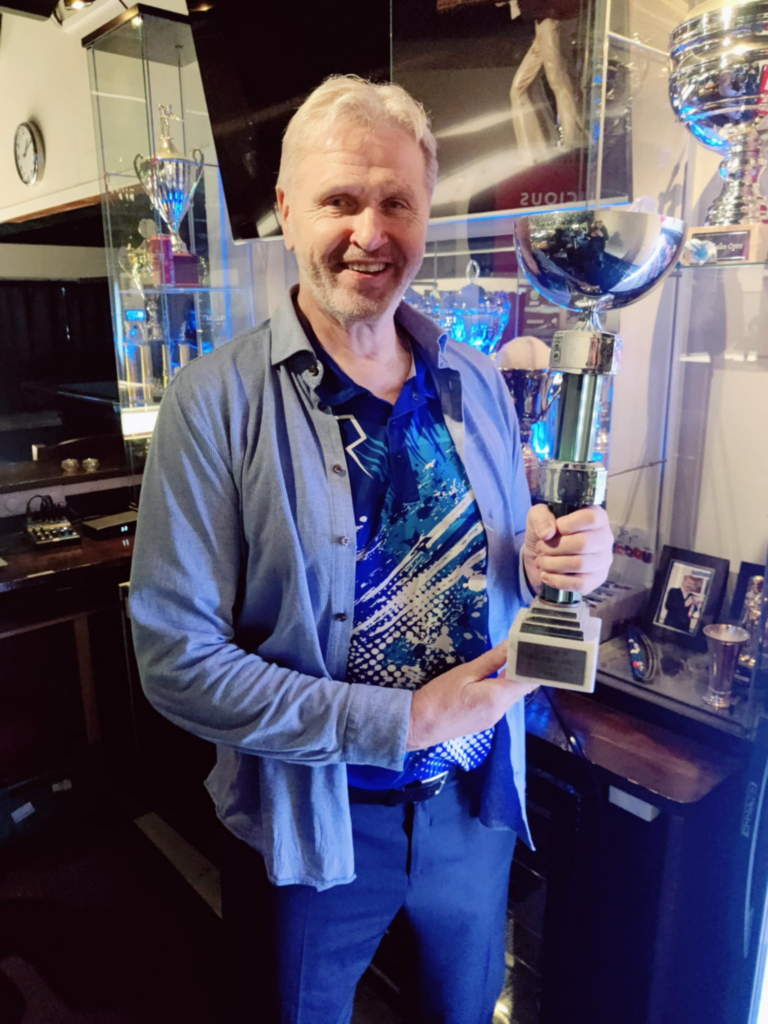
Stemmen mange kjenner
For det brede publikum er det kanskje stemmen de først tenker på.
Rolig. Analytisk. Engasjert, men aldri overdrevet.
Som kommentator har han vært med gjennom dramatiske VM-kvelder, lange finaler og øyeblikk der alt avgjøres på én sort.
– Det er rart, sier han, – for selv om du sitter i en kommentatorboks, så kjenner du det i kroppen.
Han vet hvordan det føles å stå der selv. Hvordan hånden kan kjennes litt tyngre når kampen står og vipper. Hvordan tankene kan begynne å løpe.
– Det mentale er enormt. Folk ser teknikken. Men det er hodet som avgjør.
Når han kommenterer, handler det ikke bare om å beskrive hva spilleren gjør. Han vil forklare hvorfor.
– Hvis du forstår valget, forstår du dramatikken.
Han kan bli stille når et avgjørende støt skal tas. La øyeblikket få leve. Han vet at snooker ikke trenger støy for å være spennende.
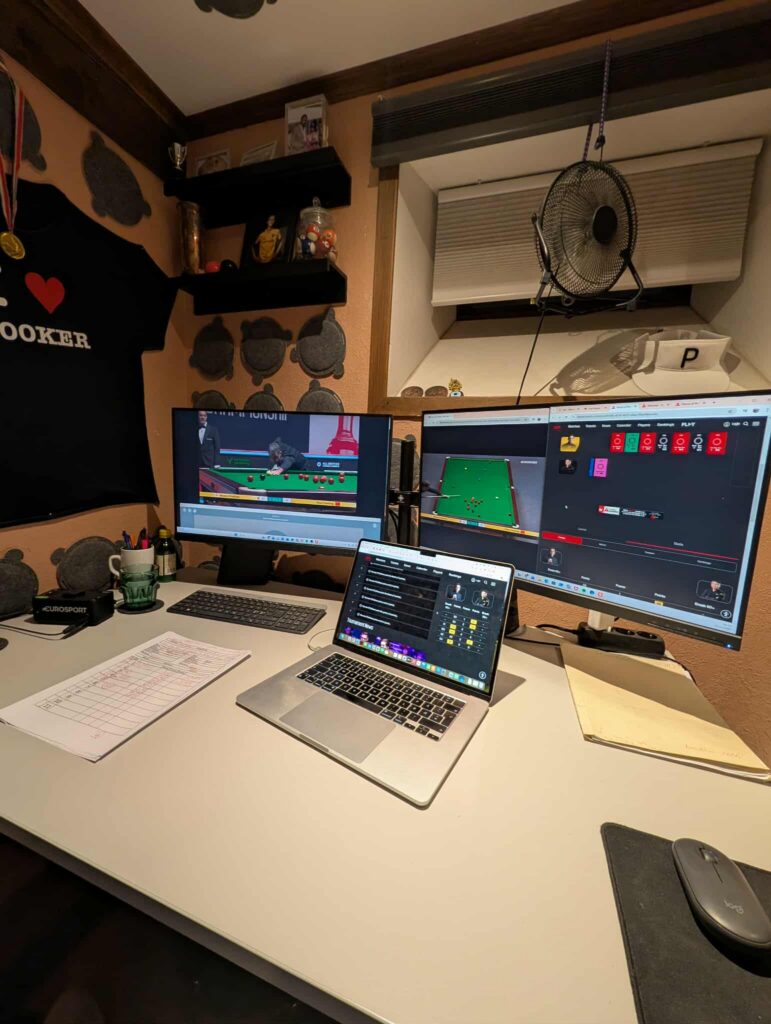
Kroppsspråket rundt bordet
Når han selv står ved bordet, er det noe nesten meditativt over bevegelsene. Han går rundt stillingen med rolige steg. Sikter. Reiser seg igjen. Sjekker vinkelen én gang til.
Det er ikke hastverk der. Ikke panikk.
– Du må gi deg selv tid til å ta riktig valg, sier han.
Køen hviler stødig i hånden. Blikket veksler mellom objektkule og lomme. Det er en rytme i det. En rytme som bare kommer av tusenvis av repetisjoner.
Og så – støtet.
Rent. Uanstrengt. Som om det aldri var tvil.
En kulturbærer
Gjennom årene har han blitt noe mer enn en spiller og kommentator. Han har blitt en referanse.
Yngre spillere har søkt råd. Ikke nødvendigvis fordi han roper høyest, men fordi han har vært der. Fordi han har gjort feilene selv. Fordi han vet hva som kreves.
– Du må bygge fundamentet først, sier han. – Det kreative kommer etter kontrollen.
Det er en setning som sier mye om ham.
Han elsker det spektakulære. Men han respekterer det grunnleggende enda mer.
Et liv med kritt på fingrene
Det er lett å romantisere et langt liv i idrett. Men for Torstein handler det ikke om romantikk. Det handler om tilstedeværelse.
Om timer alene ved bordet. Om stillheten i lokalet sent på kvelden. Om lyden av kuler som treffer hverandre igjen og igjen.
– Det er noe eget ved det, sier han. – Den lyden setter seg nesten i kroppen.
Han ler når han innser hvor nerdete det kanskje høres ut.
Men det er nettopp det som har drevet ham: fascinasjonen. Nysgjerrigheten. Gleden over å forstå litt mer i dag enn i går.
Vi har på følelsen at dette gjelder mange andre ting i livet også. Dette er helt klart en mann som reflekterer over det meste.
Mer enn et kallenavn
«Trickwik» kan høres ut som en showfigur. Men bak navnet står et menneske som har brukt store deler av livet sitt på å løfte en sport som ofte har måttet kjempe for plass og respekt.
Han har stått i miljøet når det var lite. Han har vært der når interessen har vokst. Han har bidratt både foran kamera og i det stille bak kulissene.
– Jeg føler fortsatt den samme fascinasjonen, sier han til slutt. – Det er kanskje det viktigste.
Han sitter litt tilbake i stolen. Rolig.
– Det er alltid noe mer å lære.
Og kanskje er det akkurat det som oppsummerer Torstein «Trickwik» Wik best.
Ikke bare trickshotene.
Ikke bare kommentatorstemmen.
Ikke bare merittene.
Men den vedvarende nysgjerrigheten. Den stille dedikasjonen. Og kjærligheten til et spill som fortsatt, etter alle disse årene, får ham til å lene seg litt frem i stolen – som om neste støt alltid er det viktigste.
Eurosport, formidling og den «hemmelige» sporten
Det er likevel umulig å snakke om stemmen uten å snakke om kanalen som har båret sporten frem. For hadde det ikke vært for Eurosport, ville snooker i praksis vært en hemmelig idrett i Norge.
En sport nesten totalt fraværende i aviser, på norske TV-flater og i nyhetsbildet. Aldri førstesidestoff. Sjelden nevnt. Helt stille.
Likevel: Ratingene forteller en annen historie.
Snooker er like populært som tennis og Tour de France. På seertall konkurrerer det med de største rettighetspakkene. Og år etter år har kanalen fornyet avtalene. Ikke nødvendigvis fordi alle beslutningstakere alltid har forstått sporten – men fordi tallene har vært for gode til å ignoreres.
– Det har vært noen få mennesker som virkelig har stått på, sier han. – Som har hatt det på agendaen. Som har forklart reglene igjen og igjen. Skapt engasjement. Frelst nye seere og tatt vare på de gamle.
Tiår etter tiår.
I dag følger mange sendingene via HBO Max, men fundamentet ble bygget av en kanal som trosset oddsen og lot den grønne filten få plass i norske stuer.
Og midt i dette står formidlingen.
Som rektor-sønn ligger det kanskje noe pedagogisk i ryggmargen. Han forklarer aldri for å imponere. Han forklarer for at folk skal forstå. For at de skal kjenne hvorfor et valg tas – ikke bare se at det tas.
Det er formidling som håndverk. Rolig. Presis. Tålmodig.
Om klubbene, rekruteringen og merittene
Når han snakker om å «drive salonger», er det en forenkling. Det han i realiteten har bygget opp og ledet, er idrettsklubber med biljard som kjerne. Miljøer der struktur, trening og utvikling har stått i sentrum.
Gjennom årene har han ikke bare vært en del av norsk biljards utvikling – han har vært en drivkraft i den.
Han har rekruttert og inspirert et stort antall Norgesmestere og Europamestere. Flere enn de fleste i landet kan vise til. Samtidig har han selv oppnådd begge deler.
Det sier noe om spennvidden.
Fra egen konkurransehverdag – til å løfte frem neste generasjon.
En reise som aldri hadde trengt å ta slutt
Intervjuet kunne fortsatt langt ut i evigheten. Bare det å nedskalerer til dette vi endte opp med her var en kamp. For denne mannen er rett og slett en institusjon i biljardens verden. Vi håper likevel at dere fikk et inntrykk av at mannen bak stemmen til snooker er noe mer en bare en kommentator.
Tenk på det neste gang du setter deg ned for å nyte en sending. Denne mannen har levd et helt liv i denne idretten. Ikke rart det oser av engasjement og klokskap. For det denne mannen ikke vet om snooker og biljard, er ikke verdt å vite.
Vi takker høflig for tiden vi fikk bruke, og ser fram til å høres ved neste sending.