

Several international federations have recently opened their doors to Russian and Belarusian athletes, often under neutral flags and with strict conditions. The decisions mark a shift after several years of almost total banning of Russian sports as a result of the war in Ukraine.
The International Olympic Committee (IOC) has recommended that individual athletes who do not actively support the war be allowed to participate in international competitions. Some federations have already followed suit, while others still insist on a total ban.
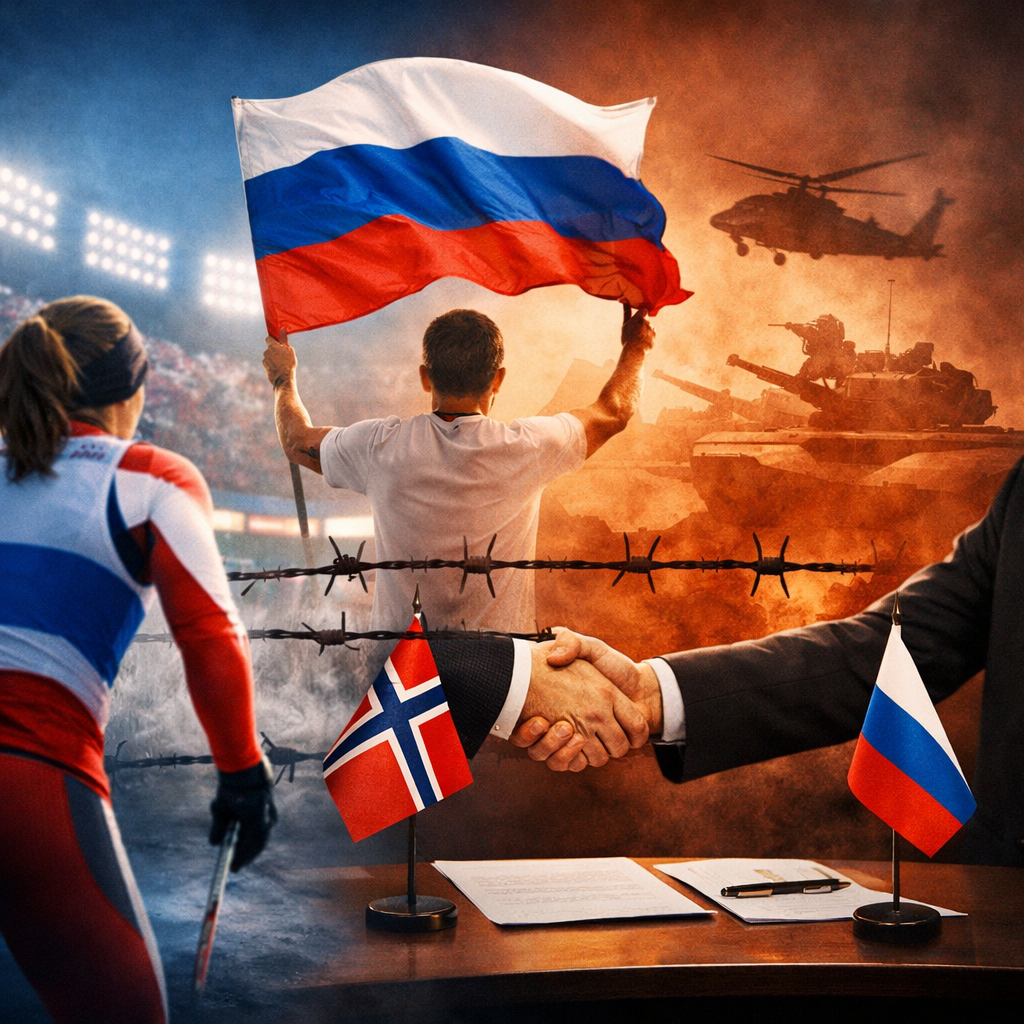
At the same time, political and economic agreements between Western countries and Russia continue in selected areas – including in Norway. This raises a fundamental question: Why is it that sport must in practice bear the heaviest symbolic punishment?
Sport as a moral arena
Sport has historically been used as a political tool, whether through boycotts, exclusions or demonstrations. The argument has been that sport represents community, values and international solidarity – and therefore also has a special responsibility when international law is violated.
Critics, however, point out that sports often affect individual athletes who have little political influence, while state actors can still negotiate, act and cooperate where it is deemed "necessary" or "strategic".
Political compromises – zero tolerance in sports?
Norway, like other countries, has maintained dialogue and some areas of cooperation with Russia, including in fisheries management, nuclear safety and border relations. This is justified by realpolitik and the need for stability in the High North.
The question many ask is why such pragmatic considerations are considered acceptable in politics, while sports are expected to act with absolute principledness.
Is it reasonable for a cross-country skier, chess player or tennis player to pay the price for a war they did not choose, when state authorities simultaneously enter into agreements behind closed doors? And is it consistent to use sport as a moral marker, when other areas of society are in practice exempt from the same logic?
Difficult balance
Supporters of the continued ban believe that any normalization, including in sports, contributes to weakening pressure on Russia. They fear that sports participation could be used for propaganda purposes, regardless of the flag and use of symbols.
The counterargument is that sport should not be a political punishment tool alone – especially when the same policy involves compromises in other fields.
The debate is far from over. But as Russian athletes gradually return to the competitive arenas, the contrast between political realities and the idealism of sport is becoming increasingly clear.
And perhaps this is precisely what should be discussed more thoroughly: Is it right that sports should be morally stricter than politics itself?